To be honest, for a long time, my business was just a collection of thoughts swirling around in my skull.
If you’ve been involved in content creation, you know exactly what I’m talking about. We like to think that we’re in flow, but the reality is often just a high-speed chase inside our own heads. Ideas for a shoot, tasks for a client, notes from a conversation, plans for a rebrand—they were all in there, competing for my mental space. I felt like I was across everything, but the truth was that I internalised a lot of the chaos I felt.
When everything lives in your head, there is no “off” switch. You take your business to bed with you, you take it to lunch, and you definitely take it into every conversation you have with your team, and even when you’re meant to switch off, it continues in the conversations with your family.
The biggest friction point wasn’t just my own stress, though—it was communication. I’d think I had shared a vision with the team at Social Star, only to realise later that I was essentially talking to a garden wall. I was throwing information out there with passion, but because it didn’t have a tangible place to live, it wasn’t being received. It wasn’t being built upon. It was just hitting the wall and falling to the ground.
I’ve come to realise that when your business only exists in your memory, you aren’t leading. You’re just reacting to the loudest thought in the room. If I wanted to scale — if I wanted Social Video to become the “content-first” powerhouse I envisioned — I had to stop being the bottleneck. I had to get the business out of my head and into a systemised world.
Attention vs. Intention
There’s a common fear among creatives that systems are the enemy of art. We think that if we write down a process or create a checklist, we’re killing the magic.
We’re turning into a factory.
But I’ve come to realise it’s the exact opposite.
Systems don’t kill your creative juices, they build the bridge that allows those juices to actually reach the intended people.
Think about it this way: In the world of social media, everyone is obsessed with Attention. They’re like people in a crowded marketplace shouting at the top of their lungs that they have the best fruit. “Look at me! Watch this Reel! Like this post!” That’s short-form noise. It’s exhausting, and it’s a race to the bottom.
Intention is different. Intention is the conversation you have with the shopkeeper once you’ve walked through the door. It’s the “long-form content.” It’s the depth.
Building a system is effectively opening the door to your shop and inviting people in. It shifts your perspective from being “stuck in the trees,” where you’re just trying to survive the next task, to having a bird’s eye view.
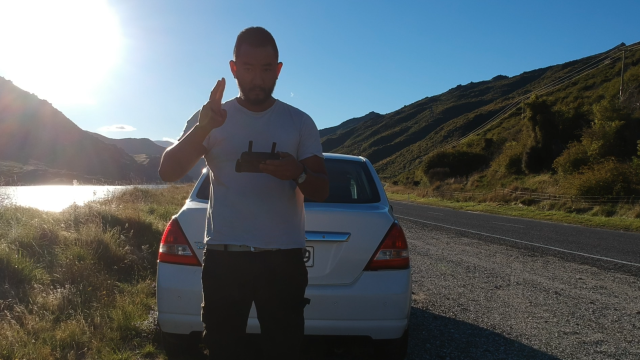
I call it the drone perspective.
When you fly a drone, you aren’t just looking at the leaf in front of you; you see the entire landscape. You see where the path leads. You see the obstacles before you hit them.
Systems are the drone. They allow you to pull back and see the entire business landscape, which finally gives you the freedom to move with intention instead of just chasing the next hit of attention.

The Social Video Way
As we’ve evolved Social Video from a stock-standard video production agency into a content-led, system-driven business, the gaps in instinct became impossible to ignore.
I realised I couldn’t scale a “feeling.”
I couldn’t ask a team member in Malaysia or a partner in Australia to “just know” what I was thinking.
We had to build a framework that was standardised as required, but flexible as needed.
This is the core of the Social Video philosophy. We aren’t building a rigid cage; we’re building a foundation.
We brought everything into Notion — it’s our single source of truth. If it isn’t in Notion, it doesn’t exist. We replaced the “back-and-forth” of endless chat messages and emails with standardised checklists and visible workflows.
For example, when we do a “Seasonal YouTube” series, we don’t wing it. We have a system for the 6–10 episode arc. We know who the information is for before we even turn the camera on. This doesn’t stop us from being creative; it actually gives us the structure to go further. Because the “how” is handled by the system, my brain is free to focus on the “what” and the “why.”
This shift also allowed me to focus on my bigger mission: building that creative bridge between Southeast Asia and Oceania. By having a system that works across time zones and cultures, we can leverage the “creative juices” of a global team without the chaos of miscommunication.
How to Get the Chaos Out of Your Head
If you’re feeling that “messy” mental load right now, if you feel like you’re doing a lot but not moving forward, you need to clear the deck.
This is the exact 4-step blueprint I used to transition my independence into systemised communication:
Step 1: Infinite is Heavy Stop holding conversations with yourself. If a task, an idea, or a process exists only in your head, it isn’t an asset yet; it’s a liability. Get it out. Whether it’s a physical notebook or a digital page, get your thoughts into a tangible space where you can look at it objectively.
Transcribe your conversations and use AI tools to summarise.
Step 2: Less is More One of the biggest mistakes I see is businesses trying to solve chaos with more tools. They have an app for tasks, an app for notes, an app for communication, and an app for calendars. It creates more friction, not less. Find one system that can encompass your whole workflow. For us, it’s Notion. It handles task tracking, project management, and specifies communication with context.
One login. One source of truth.
Step 3: The Checklist I have a simple rule now: If you have to do a task more than once, it needs a checklist. Don’t rely on your memory to ensure the audio quality is right or the SEO tags are in place. Write it down and standardise it within your workflow.
It is the only way you’ll ever be able to step back, maintain quality assurance and let someone else lead the process.
Step 4: The Power of Boredom This is the most “un-business” advice you’ll hear, but it’s the most important. Once the system is carrying the weight of the tasks, put the tools down.
Go for a walk. Procrastinate. Get bored.
Your best imagination doesn’t happen when you’re busy managing chaos; it happens when your mind has the space to wander. That’s where the next big business pivot, the next YouTube viral idea, or the next Notion workflow comes from.
Are You Building a Bridge?
Looking back, the biggest change wasn’t the software we used or the number of posts we published. The biggest change was mental.
When you build a system, you stop carrying the weight of the business. You let the system carry it for you. This allows you to show up for your clients, your team, and your audience with a clear head and a focused heart.
So, I want you to take a hard look at how you’re running things today.
- Are you still carrying the weight of every conversation in your head?
- Are you still “all over the place” because you’re chasing attention?
- Or have you started building the systems that allow you to lead with intention?
At the end of the day, you have to ask yourself:
Are you building a bridge to your community, or are you still just talking to the garden wall?
I love talking about systems and learning about different ways to apply intention for attention.
Let me know if you can relate.